Use your PP&P login!
 

Findit

User Login

 
Cover Story: Pharmacy’s Legal Liability and USP

Risk Reduction Strategies   
By James Ruble, PharmD, JD

“To improve is to change; to be perfect is to change often.” -Winston Churchill

An introduction to a pharmacy law course may sound something like this: “Welcome to one of — if not the most — legally regulated professions in society. Welcome to pharmacy.” Due to the large number of regulations, pharmacy rules are dynamic and frequently change. This observation takes on additional meaning as pharmacists become more involved in patient care and their legal liabilities increase exponentially. Over the past four years, USP Chapter <797>...
 

Read more...
 
Why Didn’t I Think of That...? Pump Alerting Software

An Interim Solution to Smart Pump Implementation   
By Rick Carlson, PharmD, Brent Palmer, BSN, Kyle Johnson, BS, and R. Scott Evans, MS, PhD, FACMI

Incorrectly programmed infusion pumps pose a serious patient safety hazard. Part of the Intermountain Healthcare system, LDS Hospital in Salt Lake City purchased smart pumps to address these safety concerns, but due to hardware and software incompatibilities our smart pump implementation was delayed in the ICUs. Despite the delay in implementation, we determined we needed a system that would quickly alert the health care team when IV infusion pumps are programmed incorrectly.

Read more...
 
Best Practices and Budgeting for Cleanroom Wipes and Cleaning Agents

By Lou Diorio, RPh

Like a comprehensive blueprint, USP <797>, when read in its entirety, provides a science-based roadmap to fulfilling its primary objective – preventing patient harm. When implementing the standards set forth in the chapter, deciding where to begin can be the most daunting step. It may be preferable to break a task as complex as the proper preparation of CSPs into smaller, easier-to-digest portions. For instance, perhaps the most basic aspect of a cleanroom’s daily life cycle is...

Read more...
 
Implementing a Hybrid Medication Distribution System

By Robert Begliomini, PharmD

Lehigh Valley Hospital and Health Network (LVHHN) includes three community hospitals in Pennsylvania: Lehigh Valley Hospital-Cedar Crest and Lehigh Valley Hospital-17th and Chew in Allentown, and Lehigh Valley Hospital-Muhlenberg in Bethlehem. Recognized by US News & World Report as one of America’s best hospitals, and named among Fortune’s 2008 list of the “100 Best Companies to Work For,” LVHHN is licensed for a total of 950 beds and has fully implemented bar coded medication administration (BCMA), EMAR, and CPOE. In our efforts to increase the accuracy of medication dispensing and improve patient safety, we have implemented...

Read more...
 
Bar Code Scanner, Printer, and Wristband Media Selection

Lessons Learned from the VA    
By Ronald Schneider, RPh, MHA, and Jonathan Bagby, RN, MSN, MBA-HCM

The Department of Veterans Affairs (VA), Veterans Health Administration (VHA), the health care arm of the VA, released its bar coded medication administration (BCMA) software application to all VA medical centers in August 1999, with a mandate for the software to be implemented VA-wide by June 2000. By 2002, 100% of medications were administered to VA inpatients using BCMA. The VA administers over 600,000 medications daily through the BCMA software. Although best practices and pre-implementation guidelines were shared with VA medical centers to facilitate BCMA implementation, challenges persisted following implementaion due to bar code quality, dispensing, labeling, and coordination issues. It was apparent that continuous monitoring and control processes were needed to reduce BCMA workarounds.

Click here to download the PDF

Read more...
 
Controlled Environment Air Sampling

Meet USP's Environmental Monitoring Guidelines to Achieve <797> Compliance 
By Holly Simmons, RPh

The goal of the revised USP Chapter <797> is to provide increased patient safety and consistent recommendations for activities related to sterile compounding, and these guidelines apply to all entities that prepare compounded sterile preparations (CSPs). This article is intended to provide a brief summary of USP <797>’s environmental monitoring requirements, with an emphasis on the updated guidance for air sampling and quality controls. However, it is incumbent upon the reader to refer to the chapter itself for further explanation and detail on the issues discussed herein. 

Click here to download the PDF  

Read more...
 
<< Start < Prev 1 2 Next > End >>

Results 1 - 10 of 16

Featured Advertiser

The Baker Company

Current Issue: June

Articles from May 2008

A Multidisciplinary Approach to Medication Reconciliation

article image By Pam Benson, RPh, and Curt Trowbridge, RPh  Medication reconciliation is a growing concern for many hospitals; not only does The Joint Commission (TJC) mandate it, but it is also a best practice for achieving patient safety....
+ Full Story

Additional Articles

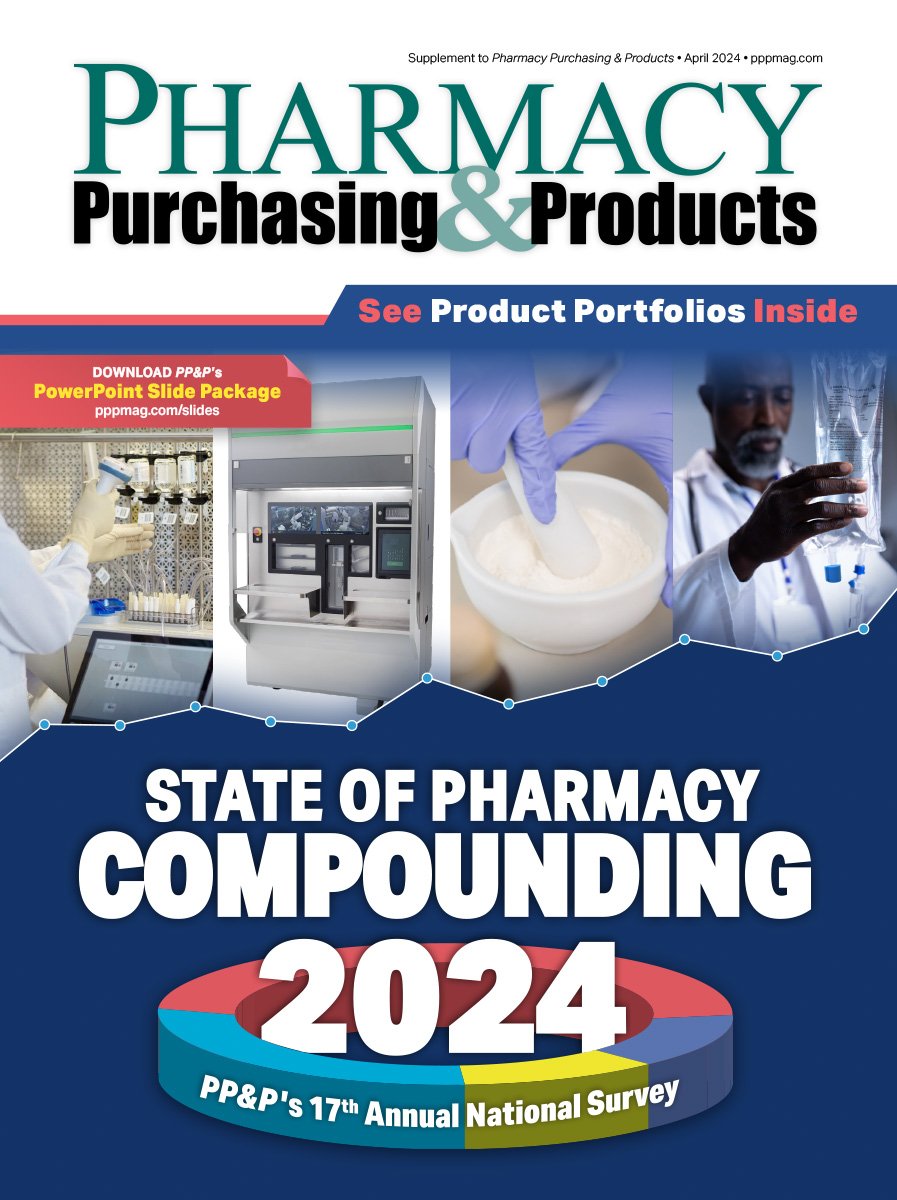
The State of Pharmacy Compounding

Articles from March

Patient Safety: Anticoagulation Management

article image Address TJC Guidelines Now for a Successful Survey in 2009 By Kurt A. Patton, MS, RPh  Widely used for multiple clinical indications, anticoagulation therapies require close dose...
+ Full Story

Additional Articles

Articles from February

PP&P February Issue 2008From The Publisher-PP&P: Are You a Part of It?

article image PP&P: Are You a Part of It? When we launched Pharmacy Purchasing & Products five years ago, the idea for a magazine containing practical purchasing guidance was not new; after all,...
+ Full Story

Additional Articles